Hours on the treadmill alone won’t guarantee fat loss. The exercises below use a lot of muscle at once, so they burn plenty of energy while helping you build lean muscle.
If you want to lose fat while building muscle, here are five exercises that give you a lot of results for the time you put in.
Exercise Number One: Squats—Legs, Glutes and Core
The first and most important exercise is the squat. It works your legs, glutes and core, some of the biggest muscles in your body, so it builds strength and burns a good amount of energy in every set.
There is one common mistake people usually make while squatting—but you must avoid it. Many people perform “half-squats,” failing to descend all the way down. Do not make this mistake. You must train using a full range of motion; go all the way down and lift the weight with explosive power.
You should perform four sets of squats, aiming for a rep range of 8 to 12.
Additional Benefits of Squats
- Improves lower body strength
- Builds athletic performance
- Increases calorie expenditure
- Enhances balance and stability
- Strengthens core muscles
💡 Pro Tip: Focus on proper depth and controlled movement rather than simply adding more weight to the bar.
Exercise Number Two: The Deadlift—The Ultimate Strength and Fat Loss Combo
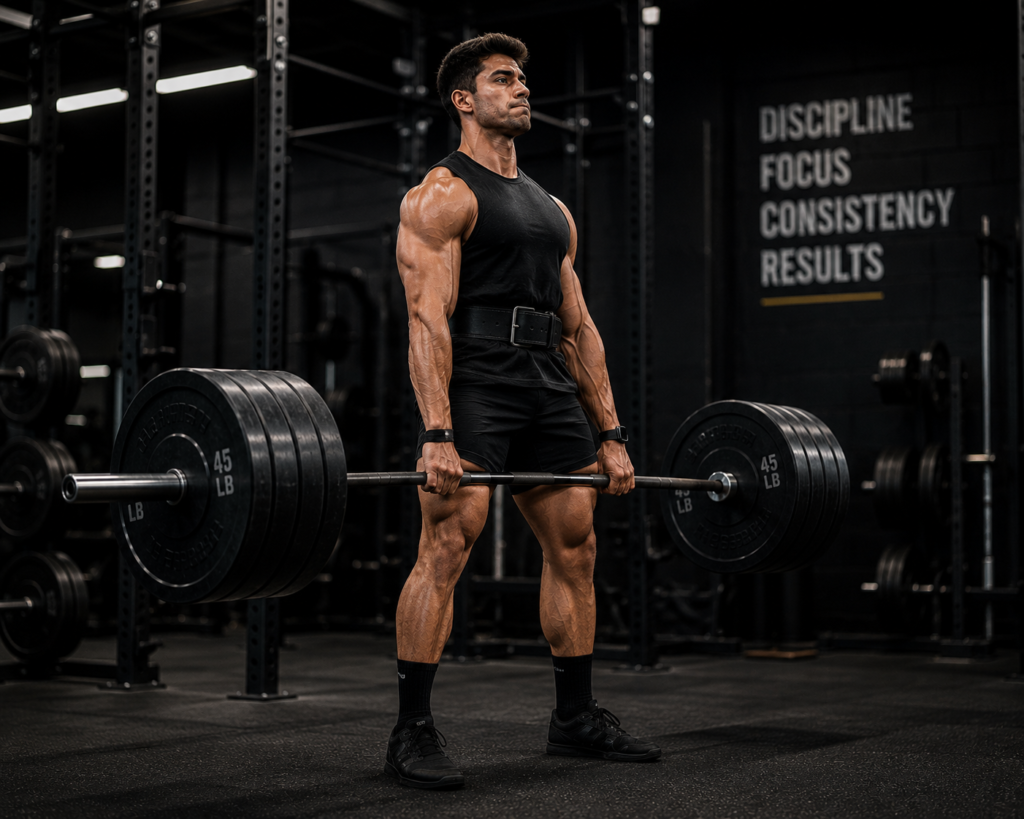
Yes, the second most powerful exercise is the deadlift. This exercise engages your entire body—specifically your legs, back, and core.
The American College of Sports Medicine (ACSM) 2026 resistance training guidelines recommend training every major muscle group at least twice a week. Multi-joint lifts such as squats and deadlifts let you cover several muscle groups in one exercise.
Because deadlifts use so many muscles at once, each set takes a lot of effort and burns more energy than smaller exercises like curls.
However, when deadlifting, always ensure that your form is perfect. Keep your back straight at all times; otherwise, you risk sustaining a lower back injury.
Aim for three to four sets of deadlifts, training within a rep range of 5 to 8.
Why Deadlifts Are So Effective
Deadlifts are often considered one of the best full-body exercises because they challenge multiple muscle groups simultaneously. This increases overall calorie burn and stimulates muscle growth throughout the body.
⚠️ Common Mistake: Rounding the lower back during heavy lifts.
Exercise Number Three:Burpees—The Ultimate Fat-Burning Machine
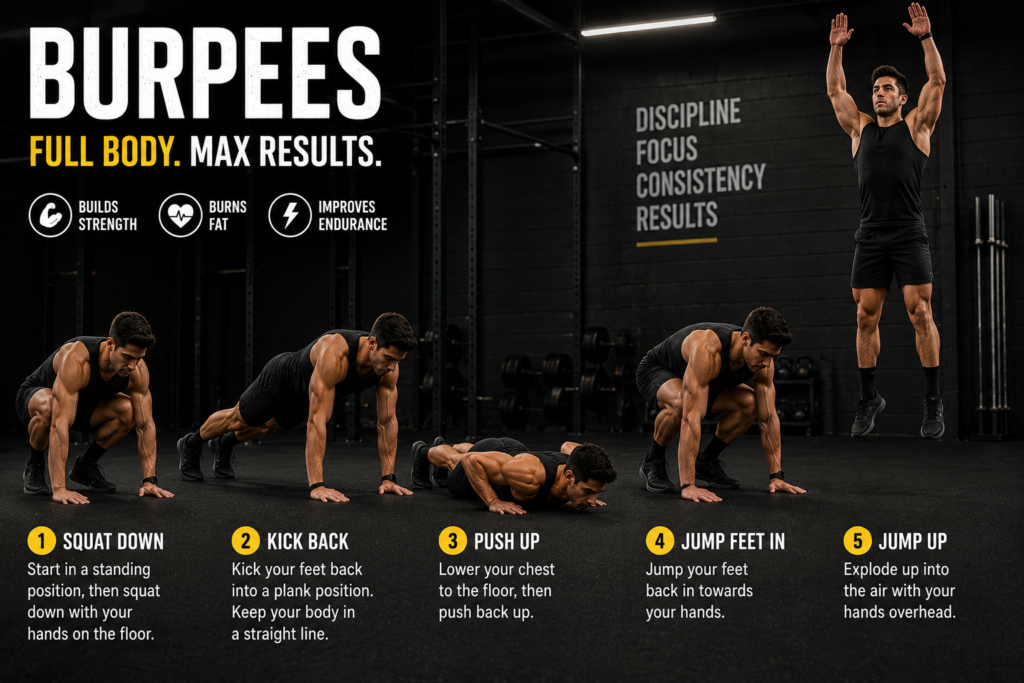
One of the best fat-burning bodyweight exercises is the burpee.
It represents the perfect combination of cardio and strength training.
If you want a quick, tough conditioning finisher, burpees are hard to beat.
Try them as HIIT (high-intensity interval training).
For example, perform burpees for 30 seconds, rest for 15 seconds, and repeat this cycle for a total of six rounds.
It’s a time-efficient way to push your heart rate up. Remember, your total calorie intake across the week still decides how much fat you lose.
Why Burpees Are So Powerful
Burpees challenge your cardiovascular system while also working your legs, chest, shoulders, arms, and core. This makes them one of the highest calorie-burning bodyweight exercises available.
🔥 Fat Loss Tip: Perform burpees at the end of your workout for maximum calorie burn.
Exercise Number Four: Pull-ups—For a Strong, Wide Back
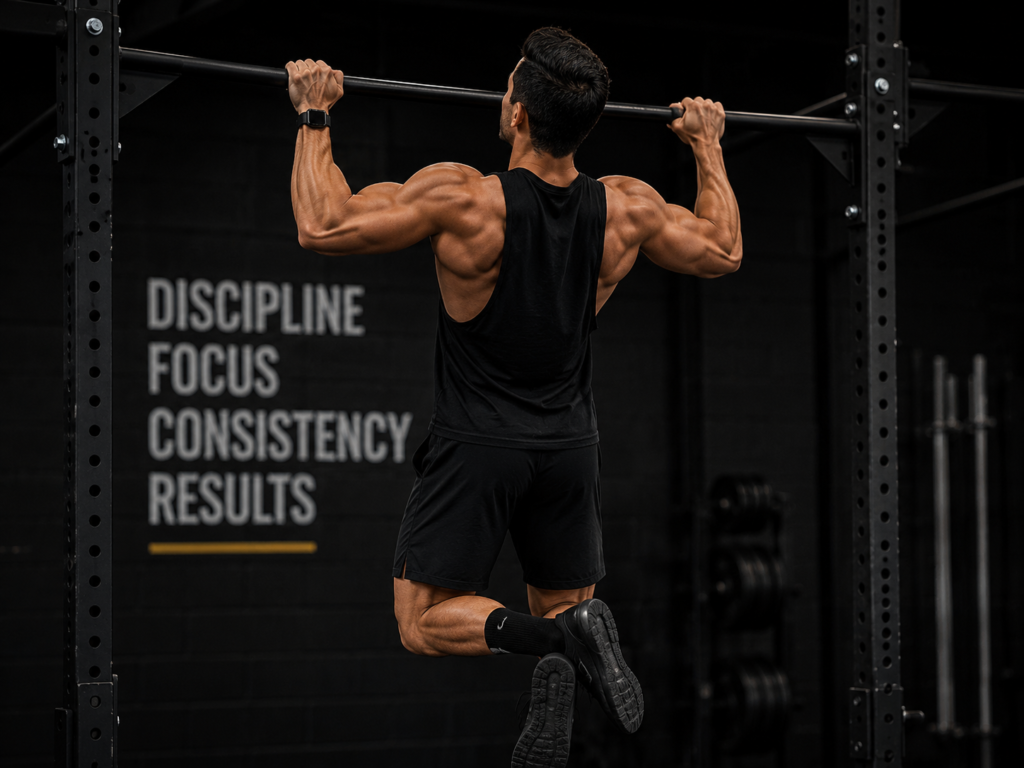
Whether you’re aiming for a lean physique or a muscular build, pull-ups are an absolute “must-do” exercise.
Performing regular pull-ups will broaden your lats, define your back, and widen your shoulders. Because you lift your whole body weight, they are also one of the most demanding upper-body exercises.
Here is a pro tip: if you are unable to perform pull-ups when starting out, use a resistance band or an assisted pull-up machine. These tools will allow you to perform pull-ups with ease, and as your strength increases, you will eventually be able to transition to doing standard pull-ups.
Aim to complete a minimum of three to four sets and train within a high repetition range.
Pull-Up Benefits
- Builds a wider back
- Improves grip strength
- Enhances upper body endurance
- Increases functional strength
💡 Beginner Tip: Focus on quality repetitions rather than rushing through the movement.
Exercise Number Five: Bench Press—For a Bigger Chest and Greater Strength
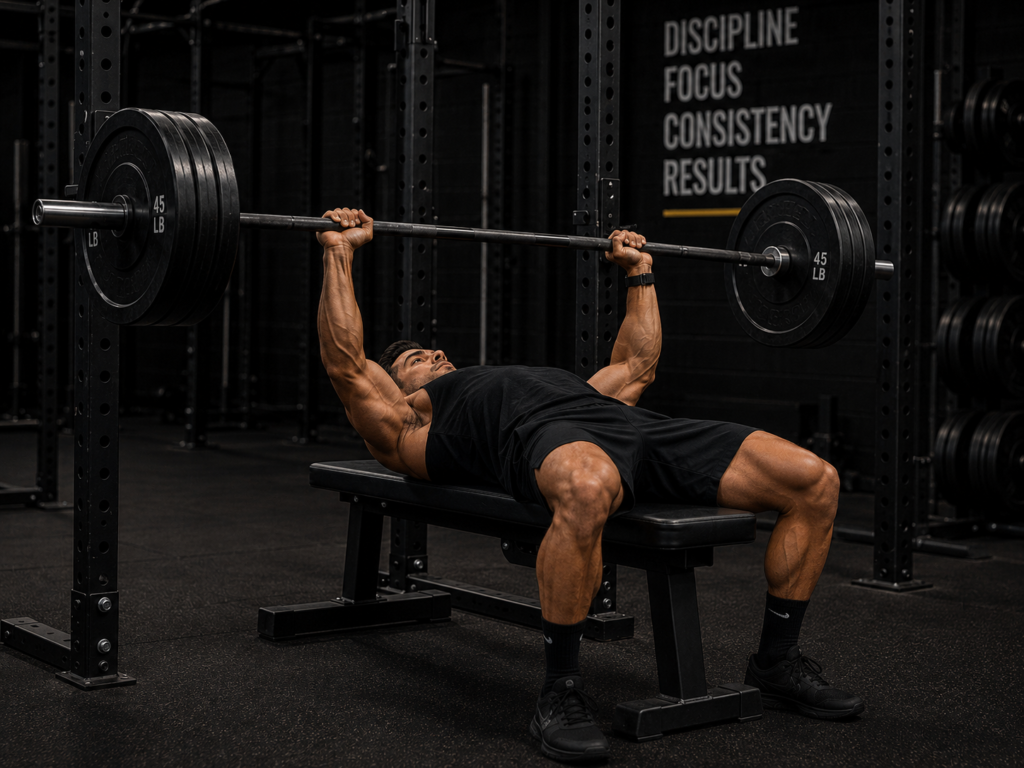
Now, let’s talk about the bench press, an exercise that will take your chest, shoulders, and triceps into absolute “beast mode.”
This exercise builds pushing strength and upper-body muscle.
There is a common mistake that people usually make—but you must avoid it. Many people tend to flare their elbows outward while bench pressing, which can strain the shoulders.
Always keep your elbows slightly tucked in and perform the lift with full control.
You should aim to complete four sets of this exercise, training within a rep range of 8 to 12.
Additional Benefits
- Builds upper body strength
- Develops chest muscles
- Improves athletic performance
- Supports progressive overload
⚠️ Safety Tip: Always use a spotter when lifting heavy weights.
Common Mistake You Must Avoid
And with that, let’s talk about a common mistake that people usually make—one that you absolutely must avoid.
That mistake is doing nothing but cardio while neglecting weight training.
Cardio burns more calories during the session itself, but weight training builds and keeps muscle while you lose fat, which helps you look leaner. The “afterburn effect” (extra calories burned after a workout) is real but small: studies of weight-training sessions measured roughly 50–130 extra calories (University of New Mexico review). So count on consistency and diet, not afterburn.
So, if you want to achieve both fat loss and muscle gain simultaneously, be sure to incorporate these five exercises into your training routine.
The Perfect Weekly Combination
- Strength Training: 4–5 Days Per Week
- Cardio: 2–3 Sessions Per Week
- Rest Days: 1–2 Days Per Week
- Protein Intake: 1.6–2.2g per kg body weight
- Water: drink enough through the day, more in hot weather
Quick Comparison Table
| Exercise | Main Muscle Groups | Type |
|---|---|---|
| Squats | Legs, Glutes, Core | Compound, lower body |
| Deadlifts | Full Body | Compound, full body |
| Pull-ups | Back, Biceps | Compound, upper-body pull |
| Bench Press | Chest, Shoulders, Triceps | Compound, upper-body push |
| Burpees | Full Body | Bodyweight conditioning |
Frequently Asked Questions
Which exercise burns the most fat?
Exercises that use many muscles at once, like burpees, squats and deadlifts, burn the most energy per minute. But fat loss comes from your overall calorie balance, not from one exercise.
Can beginners perform these exercises?
Yes, but beginners should focus on proper form before increasing weight.
How many days should I train per week?
Three to five sessions a week works well for most people. The ACSM recommends training each major muscle group at least twice a week.
Is cardio necessary for fat loss?
Yes, but it should complement strength training rather than replace it.
Final Thoughts
These five exercises are among the most effective movements for burning fat, building muscle, increasing strength, and improving overall fitness.
Stay consistent, focus on proper form, progressively increase the challenge, and support your training with a high-protein diet and adequate recovery.
Next steps: follow our fat loss workout plan for Indian men or the 8-week fat loss workout for beginners, and check your daily calorie needs with our calorie calculator.
If you found this guide helpful, share it with a friend who wants to lose fat and build muscle naturally.
Also read our Beginner Gym Mistakes Guide to avoid common training errors and get faster results.